2. Executive Summary
Sudan is currently experiencing one of the most severe humanitarian crises in the region, driven by ongoing conflict, economic collapse, and widespread internal displacement. The crisis has significantly strained already fragile public services and local infrastructure, leaving millions of people without reliable access to essential services. Al-Jazeera State has become a major destination for internally displaced populations fleeing violence in other parts of the country, resulting in an estimated 400% increase in demand for basic services in host communities.
As a consequence, vulnerable households are facing acute shortages of safe drinking water, food, healthcare, education services, and livelihood opportunities. Women, children, elderly persons, and orphaned children are particularly affected, with many families struggling to meet even their most basic needs. Local coping mechanisms have been severely weakened, increasing the risk of food insecurity, disease outbreaks, school dropouts, and long-term poverty.
In response to this urgent situation, Al-Radom Charity Organization (RCO) proposes the establishment of an integrated humanitarian initiative known as the “Humanity Hub”, a multi-sectoral response designed to bridge the gap between immediate emergency relief and sustainable community recovery.
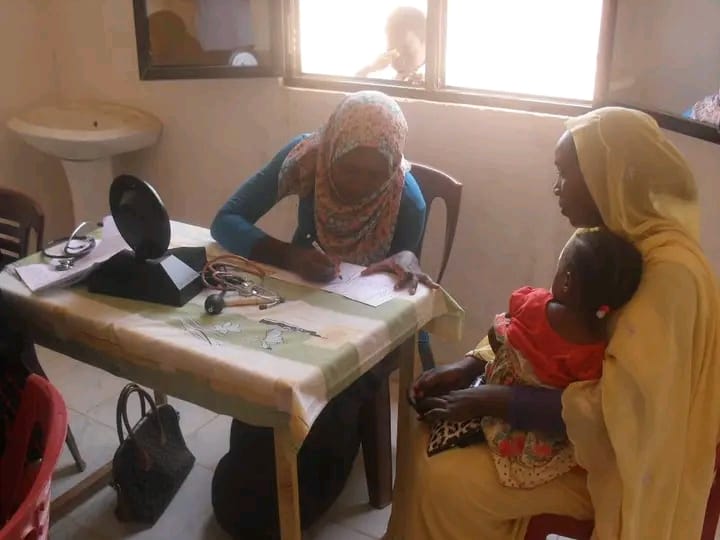
The project will deliver coordinated interventions across several priority sectors, including WASH (water, sanitation and hygiene), food security, healthcare, education, protection, and livelihoods. Key activities will include the rehabilitation of solar-powered water sources, distribution of emergency food baskets, deployment of a mobile medical unit, school rehabilitation, distribution of back-to-school kits, orphan sponsorship support, therapeutic nutrition screening, hygiene promotion, women’s empowerment initiatives, and vocational skills training for youth and women.
Through this integrated approach, the project aims to provide life-saving assistance while simultaneously strengthening community resilience and self-reliance. By combining emergency services with livelihood and education support, the initiative seeks to reduce dependency on humanitarian aid and promote long-term recovery.
The proposed intervention will directly support approximately 5,000 highly vulnerable individuals, including internally displaced persons, host community members, orphaned children, women-headed households, and unemployed youth in Al-Jazeera State.
Through strong community participation, transparent implementation, and partnership with humanitarian stakeholders, this initiative aims to improve living conditions, reduce vulnerability, and contribute to early recovery and social stability in affected communities.
The Humanity Hub model represents a practical and scalable approach to humanitarian response in Sudan, combining immediate relief, human dignity, and sustainable development pathways for communities impacted by displacement and crisis.
3. Situation Analysis & Justification
Since April 2023, the socio-economic fabric of Al Jazeera has been pushed to a breaking point.
- WASH: Existing boreholes are over-taxed, leading to a rise in water-borne diseases.
- Food Security: Inflation and supply chain collapses have left female-headed households unable to afford one meal a day.
- Protection: Displaced children have been out of school for over 3 years, increasing risks of child labor and recruitment.
- Health: The local primary healthcare system is paralyzed by a lack of essential medicines and an influx of trauma-related cases.
RCO’s Comparative Advantage: As a locally-rooted organization, RCO possesses the "Last Mile" reach and community trust necessary to navigate complex security landscapes where international actors face access constraints.
4. Project Framework
Goal
To enhance the protective environment and socio-economic resilience of IDPs and host communities in Al Jazeera State through integrated humanitarian services.
Strategic Objectives (SO)
- SO1 (Life-Saving): Provide immediate access to safe water, nutrition, and emergency food for 300 high-risk households.
- SO2 (Health & Protection): Deliver mobile primary healthcare and trauma-informed education support to 2,000 conflict-affected individuals.
- SO3 (Resilience): Empower 100 women and youth with market-driven vocational skills and "Start-up Kits" to foster economic independence.
5. Logical Framework (Selected Indicators
1. Detailed Project Outputs
|
Result Level |
Performance Indicator |
Target |
Means of Verification |
|
% of households with 15L of safe water per person/day. |
80% of targeted households (1,200 people) |
Household Surveys, Water point Monitoring Logs. |
|
|
Output 1.1: Solar-powered borehole rehabilitated.
|
Number of boreholes rehabilitated and solarized.
|
1 Borehole operational.
|
Technical Completion Report, Engineering Inspection.
|
|
Output 1.2: Community Water Management Committee established.
|
Number of WMC members trained (with gender balance).
|
1 Committee (10 members, 50% women).
|
Training Attendance Sheets, Committee Records.
|
|
Output 1.3: Hygiene kits distributed and hygiene promotion conducted.
|
Number of hygiene kits distributed and sessions conducted.
|
500 kits distributed; 10 hygiene sessions held.
|
Distribution Lists, Activity Reports.
|
|
Outcome 2: Improved food security and livelihoods among vulnerable households.
|
% of beneficiary households reporting improved food consumption.
|
70% of 300 households.
|
Post-Distribution Monitoring (PDM), Household Interviews.
|
|
Output 2.1: Emergency food assistance provided.
|
Number of households receiving food baskets.
|
300 households for 3 months.
|
Distribution Records, Beneficiary Lists.
|
|
Output 2.2: Vocational skills training delivered.
|
Number of beneficiaries completing training.
|
100 beneficiaries (60% women).
|
Training Reports, Certificates Issued.
|
|
Output 2.3: Start-up toolkits or micro-grants provided.
|
% of trainees launching income-generating activities.
|
100 micro-grants/toolkits distributed.
|
Business Follow-up Monitoring Reports.
|
|
Outcome 3: Increased access to safe education for displaced children.
|
Number of children re-enrolled in school.
|
500 children.
|
School Attendance Registers. |
|
Output 3.1: School infrastructure rehabilitated.
|
Number of schools rehabilitated.
|
2 schools rehabilitated.
|
Construction Completion Reports.
|
|
Output 3.2: Back-to-school kits distributed.
|
Number of kits distributed to children.
|
500 kits distributed.
|
Distribution Lists.
|
|
Output 3.3: Child protection sponsorship program implemented.
|
Number of vulnerable children receiving support.
|
100 children supported monthly.
|
Sponsorship Records, Monitoring Reports.
|
|
Outcome 4: Improved access to primary healthcare and nutrition screening.
|
Number of people receiving basic healthcare services.
|
2,000 outpatient consultations.
|
Medical Registers, Clinic Reports.
|
|
Output 4.1: Mobile Medical Unit operational.
|
Number of operational service days per week.
|
4 days per week.
|
Medical Activity Reports.
|
2. Detailed Project Timeline (6 Months)
This Gantt-style timeline shows the logical sequence of operations.
|
Activity Group |
Month 1 |
Month 2 |
Month 3 |
Month 4 |
Month 5 |
Month 6 |
|
Phase 1: Inception & Setup |
||||||
|
Staff Recruitment & Community Entry |
XX |
|||||
|
Beneficiary Registration & Needs Validation |
XX |
|||||
|
Procurement of Food & Medical Supplies |
XX |
XX |
||||
|
Phase 2: Core Service Delivery |
||||||
|
Food Basket Distributions (3 Rounds) |
XX |
XX |
XX |
|||
|
Mobile Clinic Operations |
XX |
XX |
XX |
XX |
||
|
Borehole Rehabilitation & Solarization |
XX |
XX |
||||
|
School Rehabilitation Works |
XX |
XX |
||||
|
Phase 3: Capacity & Recovery |
||||||
|
Vocational Training for Women & Youth |
XX |
XX |
||||
|
Distribution of Livelihood Toolkits |
XX |
|||||
|
Orphan Sponsorship Disbursements |
XX |
XX |
XX |
XX |
XX |
|
|
Phase 4: M&E and Closure |
||||||
|
Post-Distribution Monitoring (PDM) |
XX |
XX |
||||
|
Final Project Evaluation & Donor Report |
XX |
3. Specialist Recommendations for "Acceptability"
- Accountability to Affected Populations (AAP): RCO will establish a "Help Desk" and a confidential suggestion box at every distribution site. We guarantee a 72-hour response time to community complaints.
- Environmental Marker: By using Solar Power for the borehole instead of diesel, the project reduces carbon emissions and eliminates fuel-dependency risks in a conflict zone.
- Gender-Based Violence (GBV) Mitigation: Distribution sites will be selected in well-lit, central areas, and all RCO staff will sign a mandatory Prevention of Sexual Exploitation and Abuse (PSEA) Code of Conduct.
6. Implementation Strategy
- Conflict Sensitivity: Using a "Do No Harm" approach to ensure aid distribution does not trigger tension between IDPs and host communities.
- Community-Led Management: Forming Water Management Committees (WMCs) and School Parent Associations to ensure assets are maintained post-funding.
- Vulnerability-Based Selection: Utilizing a weighted scoring system (prioritizing widows, orphans, and persons with disabilities) for beneficiary selection.
7. Budget Summary (Consolidated)
|
Category |
Description |
Budget (USD) |
|
1. Emergency Relief |
Food Baskets, Shelter Kits, & Nutrition |
$52,000.00 |
|
2. Infrastructure |
Borehole Rehab & School Restoration |
$52,000.00 |
|
3. Health & Education |
Mobile Clinic Operations & Student Kits |
$35,000.00 |
|
4. Economic Recovery |
Women/Youth Training & Seed Grants |
$40,000.00 |
|
5. Protection |
Orphan Support & Social Services |
$28,000.00 |
|
TOTAL |
$207,000.00 |
Budget Narrative & Justification
Project: Humanity Hub – Al Jazeera State
Total Request: USD 207,000
Currency: All amounts in United States Dollars (USD)
1. Water, Sanitation, & Hygiene (WASH) | $28,000
This sector focuses on long-term water security to prevent disease outbreaks among IDPs.
- Borehole Rehabilitation ($18,000): Includes flushing of the existing well, replacement of damaged casing, and installation of a high-yield submersible pump.
- Solarization ($7,000): Installation of a 12-panel solar array and inverter system to eliminate the need for expensive and scarce diesel fuel.
- Community Training & Kits ($3,000): Training of a 7-member Water Committee and provision of basic repair tools and chlorine tablets for water treatment.
2. Food Security & Livelihoods (FSL) | $52,000
This is split into emergency relief ($32k) and long-term youth livelihood training ($20k).
- Emergency Food Baskets ($32,000): Support for 300 households ($106 per household). Each basket contains 25kg Sorghum, 5L Oil, 10kg Lentils, and 2kg Sugar, providing a 1-month caloric requirement for a family of six.
- Youth Vocational Training ($20,000): Covers the cost of 4 expert trainers for 45 days, venue rental, and "Business Starter Kits" (e.g., carpentry tools, welding masks, or mobile repair kits) for 50 youth graduates.
3. Health & Nutrition | $31,000
This covers both the Mobile Clinic ($20k) and Therapeutic Nutrition ($11k).
- Mobile Medical Clinic ($20,000): Includes the rental of a 4x4 vehicle for 6 months, salaries for 1 Medical Doctor and 2 Nurses, and the procurement of essential WHO-standard medicines (Antibiotics, Anti-malaria’s, Pain Relief).
- Therapeutic Nutrition ($11,000): Specifically, for 100 malnourished children. Includes procurement of Ready-to-Use Therapeutic Food (RUTF) like Plumpy'Nut and MUAC screening tapes for community health workers.
4. Education & School Rehabilitation | $39,000
- School Physical Rehab ($24,000): Repair of 4 classrooms in two schools. Includes fixing collapsed roofs, repainting, and providing 100 new wooden desks/benches.
- Student Kits ($15,000): 500 kits ($30 per kit) containing a durable backpack, 10 notebooks, stationery, and a solar-powered study lamp to allow children to study in shelters without electricity.
5. Women’s Empowerment & Protection | $48,000
- Vocational Training & Grants ($20,000): Focus on 50 women-headed households. Includes tailoring machines, fabric, and small cash grants ($150 each) to start home-based businesses.
- Orphan Sponsorship Program ($28,000): Direct support for 100 orphans ($46 per month per child for 6 months). This covers their specific nutrition, clothing, and school fees to prevent drop-outs.
6. Shelter & Essential Household Items | $9,000
- Emergency Shelter Kits ($9,000): 100 kits for newly arrived IDPs. Includes heavy-duty plastic tarpaulins, floor mats, and thermal blankets to protect families from the elements.
Cost-Effectiveness Summary
- Direct Aid Ratio: Approximately 85% of the budget goes directly to beneficiary services and supplies.
- Indirect/Operational Costs: Approximately 15% is allocated for logistics, staff supervision, and monitoring. This ensures that the high-quality standards of RCO and the donor are met.
Sustainability Factor
By investing $31,000 (15% of total budget) into Solar Power and Vocational Training, RCO ensures that after the 6-month period, the community will have free water and 150 newly skilled workers who no longer require monthly food aid.
8. Sustainability & Exit Strategy
RCO ensures sustainability by:
- Asset Handover: Transferring water and school facilities to local government and community committees.
- Market Linkages: Connecting vocational graduates to local markets and micro-finance opportunities.
- Capacity Building: Training local health workers to maintain basic services after the mobile clinic phase ends.